
Summer travel has a way of catching people off guard with one very specific problem: the nights. You spend the day sweating through markets, beaches, or city streets, you finally get back to the hotel ready to rest, and then the room is either blasting cold air conditioning or barely cooling down at all. Either way, what you are wearing to bed suddenly matters in a way it never does at home.
Most travellers pack their daywear carefully for warm weather destinations. Breathable fabrics, light colours, loose fits. Then they reach into the bag at night and pull out the same cotton pyjamas they wear in winter. It is a small inconsistency with a surprisingly large effect on how well they sleep, and how functional they feel the next day.
Table of Contents
Why Heat Disrupts Sleep More Than Most People Realise

Sleep onset requires your core body temperature to drop. It is a physiological process that happens automatically when conditions support it, and that struggles when conditions work against it. In warm, humid environments, your body has to work harder to release heat, and if your sleepwear is adding to that load rather than helping manage it, the effect compounds quickly.
The result is lighter sleep, more frequent waking, and that particular exhaustion that comes not from too few hours in bed but from hours that were not genuinely restorative. For travellers with packed itineraries, the difference between a well-rested morning and a groggy one has real consequences on how much they actually enjoy the trip.
Brands like Cool Jams build their sleepwear specifically around this challenge, using moisture-wicking fabrics engineered to pull heat and sweat away from the skin and support the body’s natural cooling process overnight. For summer travel in particular, this is not a luxury consideration. It is a practical one.
The Hotel Air Conditioning Problem
Anyone who has travelled through Southeast Asia, the Mediterranean in peak summer, or the Caribbean knows this experience well. The hotel room air conditioning runs at full power, the room feels ice cold when you check in, and you wake up at 3am either overheated because it cycled off, or shivering because it didn’t.
Standard sleepwear performs poorly in both directions. Heavy cotton traps heat when the room warms up and offers little insulation when it overcools. Lightweight moisture-wicking fabrics handle the variation better, adapting to temperature shifts rather than amplifying them.
The other hotel-specific issue is unfamiliar bedding. Hotel sheets vary widely in weight and breathability, and you have no control over what you will find when you arrive. Having sleepwear that manages its own microclimate, independent of what the hotel provides, removes one variable from an already unpredictable sleep environment.
What to Look for When Packing Sleepwear for Summer Travel
The most important property is moisture management. Fabrics that wick sweat away from the skin and allow it to evaporate quickly keep you cooler than those that absorb and hold moisture. This is the primary difference between sleepwear that works in tropical conditions and sleepwear that does not.
Fit matters too. Anything too tight restricts airflow and traps heat against the body. Loose, relaxed cuts that allow air to circulate between the fabric and the skin make a tangible difference in warm, humid environments.
Weight and pack size are travel-specific considerations that home sleepwear does not need to account for. Technical moisture-wicking fabrics tend to be lighter and more compressible than traditional cotton, which means they take up less space in the bag while performing better in the conditions you are actually travelling into.
Quick-dry properties are worth looking for if you are moving between destinations regularly. Sleepwear that can be washed in a hotel sink and dried by morning keeps your bag light and your options flexible across a longer trip.
The Bigger Picture
Sleep quality during travel affects more than just how tired you feel. AARP, drawing on input from medical professionals, notes that preparation and planning around heat exposure while travelling are essential, and that recovery and rest are foundational to staying well and energised throughout a summer trip. Poor sleep compounds the physical stress of heat, dehydration, and time zone adjustment in ways that accumulate quickly over a multi-day trip.
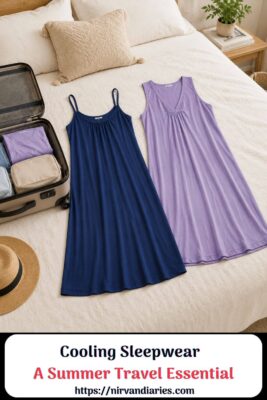
Addressing what you wear to bed is one of the more straightforward interventions available because it is entirely within your control before you leave home. A good pair of moisture-wicking pyjamas or a lightweight nightgown takes up minimal space, costs a fraction of what most travel gear does, and delivers a return every single night of the trip.
Given that sleep is what determines how much you actually enjoy the days, it seems worth a little thought before you zip up the bag.


Thanks for visiting our site nirvandiaries.com and taking the time to read this post.
If you wish to collaborate or work with us, then reach us at [email protected]
We’d love it if you’d comment by sharing your thoughts on this post and share this post on social media and with your friends.
Follow our journey on our social media channels:
X Instagram Pinterest